The latest U.S. Department of Agriculture National Agricultural Statistics Service Crop Progress Report shows 62% of the U.S. corn crop is dented and 13% has reached maturity. In soybeans, 95% are setting pods and 13% are dropping leaves. Stine® agronomists recommend scouting now for late-season standability and disease issues that could affect harvest timing.
“We’ve had varying conditions this year, with a wet season in the East and dry conditions in the West. Both are prime scenarios for stalk quality issues,” says Tony Lenz, technical agronomist for Stine Seed Company. “We really want growers to get into the field, check stalk quality and stand concerns in corn, and look for signs of late-season diseases in soybeans, so they can plan ahead for harvest.”
Stalk quality in corn
Lenz says growers should watch for crown and stalk rot when scouting corn fields.
“Crown rot appears at the base of the stalk, so if stalk quality is a concern, cut open the base and inspect the inside,” he says. “Another good way to check for stalk rot is the push test. Push on the stalk and see whether it bounces back or folds under pressure.”
Lenz notes that stalk rot risk may be higher in fields that started the season with excess moisture or struggled with persistent drought stress. He adds that corn-on-corn fields are also at greater risk and should be prioritized in scouting schedules.
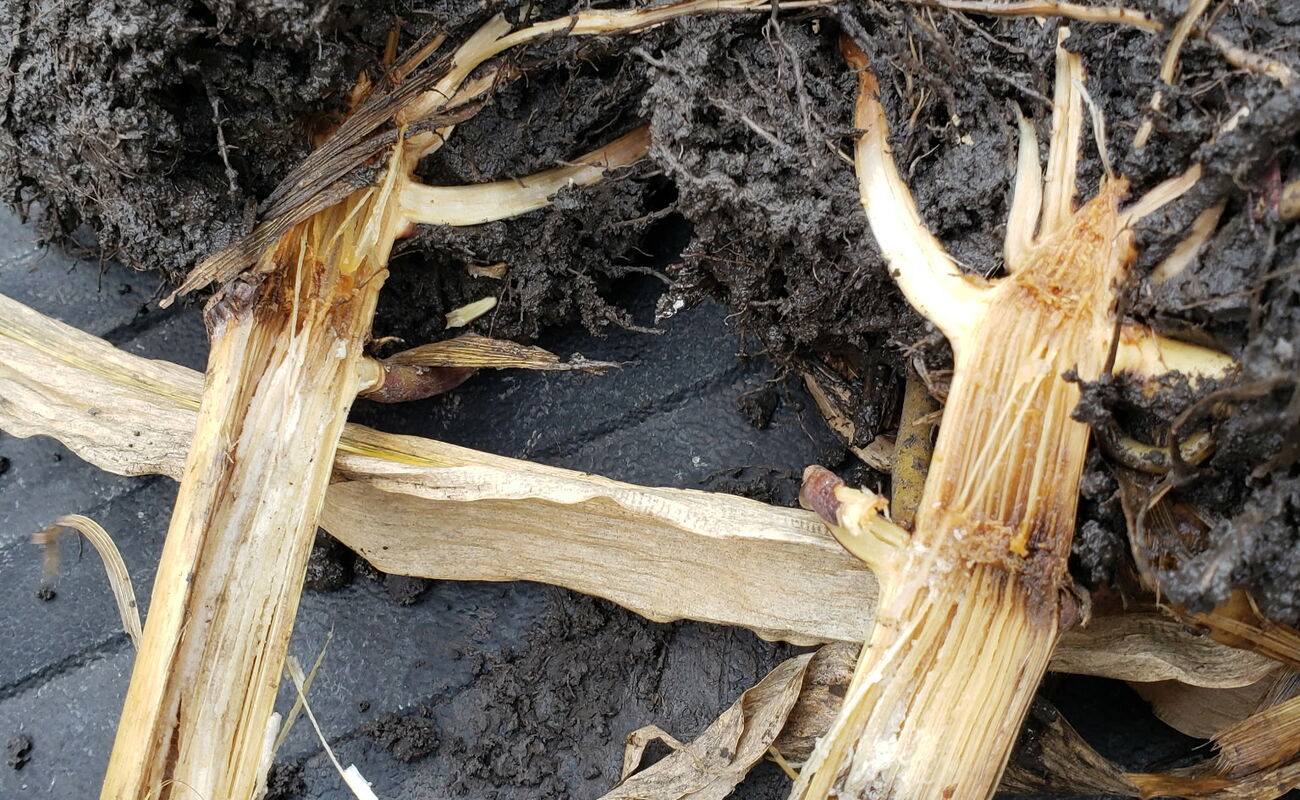
“Plants can decline quickly when these issues persist, so it’s a good practice to evaluate stand quality before harvest,” says Lenz. “I recommend walking multiple fields and checking random points throughout each field to gauge severity. Drone flyovers can also help spot lodging from above and complement boots-on-the-ground scouting.”
If stalk quality and standability are serious concerns, he recommends prioritizing those fields for harvest.
“The longer corn stands in the field, the more opportunities there are for high winds or other events to cause compromised stalks to buckle and lodge,” says Lenz. “Standability is key to a successful corn harvest, so a good rule of thumb is to tackle the most concerning acres first.”
Reviewing maturity levels
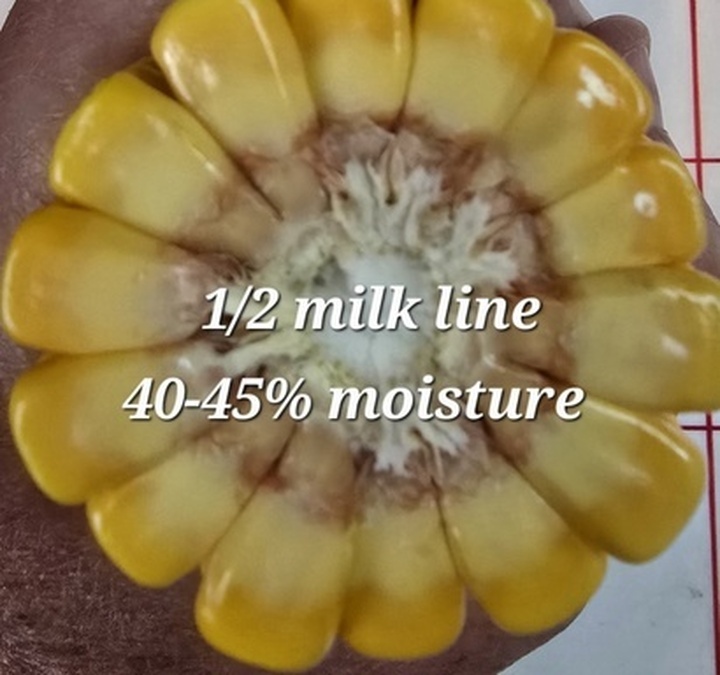
Lenz also recommends checking field maturity to help determine harvest timing. In corn, he advises cracking open an ear and checking the milk line.
Milk line progression is a reliable way to gauge how close corn is to physiological maturity (black layer). At a ½ milk line, grain moisture is typically around 40%–45%, with roughly 200 growing degree days (GDDs), or about 10 days out from black layer, assuming temperature highs in the 80s and lows in the 60s.
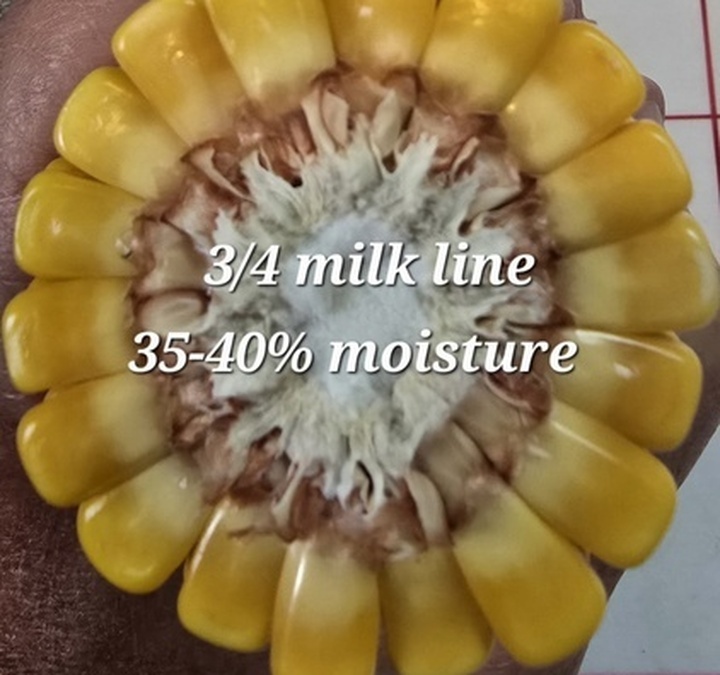
Once the ear has reached a ¾ milk line, moisture drops to 35%–40%, with around 100 GDDs remaining, or about five more days until black layer under those same conditions.
“Black layer results when the plant has reached physiological maturity, which means it has stopped sending nutrients to the ear,” says Lenz. “Corn is typically around 30%–35% moisture at this point.”
Growers may choose to prioritize fields that have reached black layer first, but some often decide to wait for the fields to dry down.
“There are advantages and disadvantages to waiting, so it’s important to weigh the risks,” notes Lenz. “Waiting for corn to dry down to around 20% moisture can reduce drying costs, but it also leaves the crop more vulnerable to weather, including high winds and lodging.”
He advises growers to monitor the forecast closely when determining when to harvest. A stretch of warm, dry weather may allow fields to dry naturally, but storms or high-wind events could quickly change harvest priorities.
Watch for late-season soybean diseases
Lenz and the agronomy team have been hearing reports of late-season soybean sudden death syndrome (SDS), brown stem rot and charcoal rot impacting fields. By now, the timing has likely passed for a late-season fungicide application, but Lenz says growers can still prioritize those fields for harvest.
“In most cases, we’re past the fungicide window to manage these diseases, but knowing the issue is present can help growers decide which fields need attention first,” he says. “Right now, we’re really seeing the value of seed treatments, which have helped slow disease development through the critical growing stages. A strong seed treatment program is something growers should consider for next season if they experienced late-season soybean diseases such as SDS.”
Lenz notes growers who are scouting for late-season soybean diseases should pay close attention to areas of premature yellowing in green fields or areas where withering plants are popping up.
“Regardless of your region, you need to get out and scout fields as they begin to reach full maturity — walk the fields, fly a drone, look for any standability concerns or disease presence, and then plan ahead for harvest,” he says. “You don’t want to find out when the combine is in the field and you’re losing valuable yield due to lodging or disease takeover.”
To learn more late-season scouting tips or how our lineup of Stine XP® seed treatments and enhancements can benefit your acres next year, contact your local Stine sales representative. Our sales reps and agronomists are available for year-round support, including answers to field-specific questions that may be weighing on your mind as we approach the busy harvest season.